Showing posts with label European Commision. Show all posts

Thursday, July 17, 2014

USA and EU impose new package of sanctions against Russia amid the ongoing Russian aggression in the Eastern Ukraine

USA President Barak Obama
(Image: Wikipedia)
As a massive anti-terrorist operation of Ukrainian forces is ongoing in Eastern Ukrainian Donbas region and the confrontation turns into the new stage, when Russia actually not only supports and finance pro-Russian separatists and terrorists in Ukraine, but also sends the troops, recruiting the mercenaries in the Russian cities including Moscow, and even fires openly at Ukrainian soldiers and border checkpoints with the missiles from the Russian territory, USA and EU finally impose the third level of the sanctions against Russia.

As Russia doesn’t show any signs of the attempts to deescalate the situation in Eastern Ukraine and continues destabilizing Ukrainian Eastern region, USA President Barak Obama announced on Wednesday, 16 July, that US unilaterally imposes the third level of sanctions against Russian companies and key sectors of Russian economic and against several Russian high officials and oligarchs as well.

Press Service of the US Ministry of Finance report about the new package of sanctions to be imposed against Russia.

Sunday, March 16, 2014

Crimean crisis: tensions escalate on the eve of the referendum, amid official decision about dismissal of Crimean Parliament and international pressure

Massive rallies in Kyiv Maidan (Independence Square)
(Image: National Post)
Situation in Ukrainian Crimea, occupied by Russian military troops and controlled by the self-proclaimed pro-Russian puppet Parliament and government, remains tense, as Russia refuses to de-escalate situation, and Crimean authorities insist on holding illegitimate “referendum” about potential joining Russia.

Despite the continuous demands of Ukrainian government to immediately withdraw the troops and military technique from Ukrainian territory and growing international pressure, Russia continues to increase its military presence in Crimea and also along the Ukrainian-Russian borders, deploying new troops and military technique on the eve of the Crimean “referendum”, scheduled for Sunday, 16 March. Ukrainian military bases and soldiers remain under Russian siege, as there were no commands fro Ukrainian Armed Forces to respond with force. In addition to that Russian troops are moving towards mainland Ukraine, as a group of Russian paratroopers has landed in Kherson region, but was prevented by Ukrainian soldiers.

Tuesday, March 11, 2014

Western countries are ready for the new sanctions against Russia if situation in Ukraine won’t de-escalate

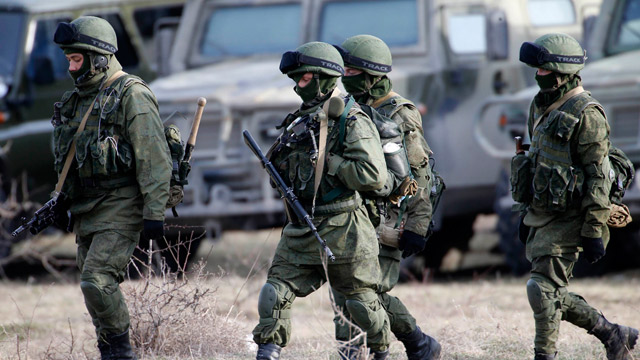
Russian military in Ukrainian Crimea
(Image: The Guardian)
Despite an increasing pressure of the Western countries and demands of Ukrainian government to withdraw the troops from Crimea, Russia continues to increase its military presence in Ukrainian Crimea, deploying additional troops and continuing seizing of Ukrainian military bases and objects and blocking Ukrainian soldiers, who don’t respond with fire on Russian provocations.

Ukrainian government continues to urge Russian authorities to hold the talks and to immediately withdraw its troops from Ukrainian soil. Prime Minister Arseniy Yatsenyuk, who is expected to meet with US President Barak Obama over Ukrainian crisis on 12 March, has accused Russian leaders of the escalation of Crimean crisis and called on Putin to hold the talks with Ukraine with the participation of the international contact group and mediators and observers. He also stated that Ukrainian government, Parliament and people are able to decide the future of Crimea and to grant it wider autonomy and additional powers and rights in the framework of a national dialogue. But it could be possible only after Russia will withdraw its troops from Crimea and cancel illegitimate referendum, which won’t be recognized by any country. Mr. Yatsenyuk also stated that there are no Crimean authorities, as the recently self-proclaimed leaders are separatists and Moscow puppets.

Saturday, January 25, 2014

Ukrainian revolution continues as negotiations are in a deadlock

On the barricades in Ukrainian capital
(Image: Reuters)
Ukraine is witnessing a real revolution as protests are spreading outside of Kyiv, and people all over Ukraine are seizing regional offices and declaring People’s Councils to represent people’s power there.

After the second round of talks held between the oppositional leaders Vitaly Klichko, Arseny Yatsenyuk and Oleg Tyagnybok, and Yanukovich and his team failed, as Yanukovich is unwilling to hear the people’s demands, oppositional leaders and protesters have taken decision to leave the negotiations’ process and to continue fight for Ukrainian freedom and rights. The leaders though urged protesters to remain only peaceful and to preserve strict discipline. The territory of Euromaidan was also fortified with the new stronger and bigger barricades, tires are being burned in front of the riot police lines, and protesters are ready for the possible storming and dispersal.

Friday, November 22, 2013

Ukrainian activists are gathering for the protests after the decision of Ukrainian government to stop the process of integration with EU

Ukrainians protesting in Kyiv against suspending of the EU
integration proces
(Image: Українська Правда)
Nearly three thousand activists are currently gathering in Kyiv downtown, on the iconic Independence Square, where on 21 November 2004, nine years ago, has started Ukrainian Orange Revolution.

Spontaneous internet campaign on Facebook started on the evening of Thursday, has called on the activists and Ukrainian citizens to show their active position and to go for the protests against the decision of Ukrainian government.

On Thursday, 21 November, Ukrainian Parliament’s speaker has closed the session without taking any decision regarding the draft law to enable medical treatment of the prisoners abroad, the law which could help to solve the issue of Ukrainian imprisoned ex-Prime Minister Yulia Tymoshenko. Two new projects of the law were added today to the existing four projects, all of them have been proposed either by the oppositional parties or by the independent MPs in Parliament.

Friday, November 15, 2013

Ukraine: The solution of Yulia Tymoshenko’s case is possible before the Summit in Vilnius

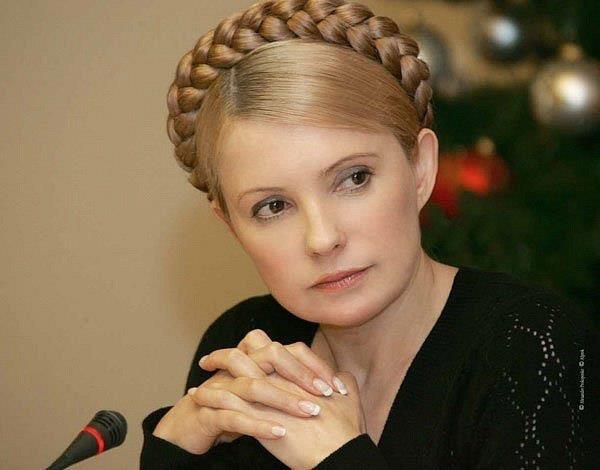
Yulia Tymoshenko, Ukrainian ex-Prime Minister
(Image: UA Info)
According to the information of German newspaper Die FrankfurterAllgemeine Zeitung and to the statements of some Ukrainian journalists Secretary of the National Security and Defense Council of Ukraine Andray Klyuev stated in his addressing to the EU representatives that the decision in the case of Yulia Tymoshenko could be taken on 19 November 2013, nearly week before the upcoming Summit of the Eastern European Partnership to be held in Vilnius.

Andrey Klyuev has reportedly assured Aleksander Kwaśniewski and Pat Cox, representatives of the observers’ mission of EU in Ukraine that the solution in the case of imprisoned ex-Prime Minister will be found soon.

Wednesday, October 30, 2013

Ukrainian Prime Minister Mykola Azarov met with EU representatives

Ukrainian Prime Minister Mykola Azarov
meeting with Aleksander Kwasniewski and
Pat Cox
(Image: Ukrinform)
The mission of European Commission represented by observers of European Parliament arrived in Ukraine on 29 October in the framework of the previously planned official visit in order to study the situation in Ukraine and the country’s readiness for the upcoming Summit of Eastern European Partnership to be held in Vilnius on 28-29 November and possible signing of the Association Agreement between Ukraine and EU.

The observers’ mission of EU is represented by Aleksander Kwaśniewski and Pat Cox will spend in Ukraine several days and will stay here till 31 October visiting Kyiv and Kharkiv where ex-Prime Minister Yulia Tymoshenko is currently imprisoned.

Monday, October 28, 2013

EU mission is expected to arrive in Kyiv amid the discussions regarding Yulia Tymoshenko issue

Mr. Cox and Mr. Kwasniewski, heads of EU mission to
Ukraine
(Image: Modern Ukraine)
Official EU mission represented by observers of European Parliament Pat Cox and Aleksander Kwaśniewski is expected to arrive in Kyiv on Tuesday, 29 October, and will stay in Ukraine till 31 October, according to the official statement of the spokesperson of Ukrainian Ministry of Foreign Affairs.

European observers plan to visit both cities, Kyiv and Kharkov where ex-Prime Minister Yulia Tymoshenko is imprisoned.

During this visit European representatives are aimed to study the situation in Ukraine and the implementation of the important laws and judicial norms and the fulfillment of the agreements made between Ukraine and EU countries in the process of cooperation on the path to European integration of Ukraine. EU representatives have currently stated Ukraine has made a big progress and met most of the conditions but there is still an obstacle for the signing of the Association Agreement with EU in case if the case of imprisoned Yulia Tymosheko will be not resolved.

Friday, October 25, 2013

EU is ready to sign Association Agreement with Ukraine if Yulia Tymoshenko case will be resolved

According to José Manuel Barroso, President of the European Commission, EU is ready to sign Association Agreement with Ukraine following the 26-28 November summit if Ukrainian authorities will find the way to resolve the case of Yulia Tymoshenko and the problem of the so called selective justice which is the matter of deep concern of the European and other Western countries as well.

During the press conference held after the EU summit in Brussels Mr. Barrosso stated that there have been talks between him, Ukrainian President Victor Yanukovich, Herman Van Rompuy, President of European Council, and other representatives of EU and European side is ready to sign the Agreement, but Ukraine need to fulfill all the obligations it took in the framework of the cooperation with the EU countries in attempt to make the next step on the path towards European integration. He also stressed that Ukraine has already done a lot in different fields including the judiciary, but there is still the problem of the selective justice and politically motivated oppressions remaining as a significant obstacle for the signing of the Agreement.

Wednesday, May 15, 2013

Štefan Füle said about perspectives of Ukraine to sign the Association Agreement with EU in November

Stefan Füle, European Commissioner for Enlargement and
Neighborhood Policy

Štefan Füle, European Commissioner for Enlargement and Neighborhood Policy, declared in his recent interview with the media agency Interfax, that European Union has special mechanisms of monitoring the fulfillment of Kyiv of the conditions necessary for signing of the Association Agreement with EU.

According to his statement there is the continuous process in Ukraine and in EU as well to control the situation with the fulfillment of the key issues stated in the list of the conditions of EU for Ukraine. This process of monitoring is a result of the cooperation of the sides, Ukrainian authorities and EU as well.

Sunday, November 18, 2012

Ambassador of Ukraine in EU said there will be possibly no summit


Yearly summit Ukraine – European Union won’t take place this year, for the first time after 15 years. EU has no motivation for setting the date for this Summit, announced Konstantin Eliseev, Ambassador of Ukraine in EU.

Mr. Eliseev added that this is a bad sign, especially considering the fact that EU will hold two summits with Russia this year, but there will be no summit with Ukraine.

European Union should organize the summit this year and state the date.

Ukrainian Ambassador stated that he had the numerous conversations with the EU representatives stressing that it is needed to set a special date for the date. But it is too late now, unfortunately, said Mr. Eliseev, as the working calendars of the both heads of EU (European Commission’s head’s Jose Manuel Barroso and European Council’s head’s Herman van Rompuy) are already fully set. The representatives of EU tell Ukraine needs to wait a little bit, said Mr. Eliseev, especially as Ukraine just held the parliamentary elections, so some political changes in the country are possible.

Monday, September 24, 2012

European Union urged Ukraine again to conduct the fair and transparent election and to resolve the problem of the selective justice


Stefan Füle, European Commissioner for Enlargement and
European Neighborhood Policy
European Commissioner for Enlargement and European Neighborhood Policy Štefan Füle urged Ukrainian authorities to conduct the transparent and fair parliamentary election and to finally resolve the problem of the selective and politically motivated justice in the country.

According to the official spokesperson of the Commissioner Peter Stano Mr. Füle has been talking about it with the first vice-Prime Minister of Ukraine Valery Horoshkovsky today.

The statement of European Commissioner says that Ukraine should take all the possible and active measures to dispel any concerns of EU regarding the issue of the political motivated trials conducted in Ukraine. This issue considers being one of the parts of the wide judicial reform which is needed urgently in Ukraine, added Mr. Stano.

In addition to that EU and the international community expect the transparent and fair parliamentary election which is expected to take part in Ukraine at the end of October. The election should be prepared and conducted in accordance with the international standards including human rights, freedom of expression and freedom of the media and the free access to all the media resources for the citizens and for the candidates as well.

Sunday, July 22, 2012

USA and Euro Union are ready for sanctions against Ukraine


European Commission building

The sanctions could be imposed against Ukraine in the close future, if the conducting and the results of parliamentary elections to be held this autumn will not be fair and democratic.

Ukraine’s parliamentary elections will be held in October 2012, and EU and USA always stated that the results and the process of those elections are extremely important for Ukrainian current position on the world’s political arena. And if there were some hopes before, now the decision was taken by UN and USA that the imposition of sanctions against Ukraine will depend on the election process, says the President of European Commission José Manuel Barroso.

According to J.M.Barroso European Commission had some doubts about Ukrainian situation before, and the concerning developments and events in the country were rare and not systematic incidents. But now those cases show systematic character and are the matter of a big concern for EU and USA, questioning the possibility of building fair and democratic political system in Ukraine at the current stage. Ukraine’s aspirations and tendencies to become a member of European community doesn’t look serious now, as there is impossible to enter EU without accepting European principles and democratic values and without integration, which seems unfortunately quite problematic for Ukrainian state today.
José Manuel Barroso, European Commission President

EU considers Ukraine’s presidential election in winter 2010 to be relatively democratic and fair and to meet European standards. That gave Ukraine the hope for strengthening democracy in the country while the positive changes and tendencies were noticed at the beginning of 2005 after Orange Revolution. But municipal elections in 2010 demonstrated the worsening of democratic situation in Ukraine, and the results of it to be felt till now. Another important problem and the case of great concern for EU and USA is the situation with judiciary in Ukraine. After criminal cases against Ukrainian opposition leaders such as Julia Tymoshenko and Yury Lutsenko and others, the concerns raised that Ukrainian judicial system is corrupt and politicized and demonstrates selective justice. Under such circumstances and with quite negative political background, with fighting opposition forces and even trying to shut down independent information sources operating in Ukraine and violating the constitutional rights for freedom of information, press and expression, there are serious concerns of European and American leaders that the future parliamentary election in Ukraine will be open and democratic. So, on the eve of the new election Ukraine faces the real challenge: if electoral process won’t go smooth, transparent and fair and the developments in Ukraine won’t be changed to democracy, the sanctions against Ukraine could be imposed in the very close future.