 |
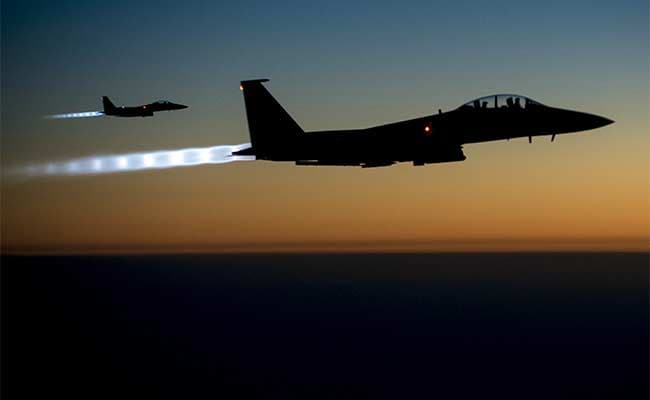
| Turkish warplanes carry out attacks against Kurds in Northern Iraq (Image: NDTV) |
Fierce battles
between ISIS militants, Kurdish fighters, US-led coalition and Turkey continues
for almost a week in a war-torn Syria and Iraq, after Turkey officially
declared its participation in the military operation against ISIS and offered
US its air force bases in order to carry out aerial strikes against the ISIS
targets in Syria and Iraq, where Daesh (Arabic name of ISIS) still controls
large areas.
International
coalition led by US has carried out 22 air strikes against ISIS in Iraq on Wednesday,
39 July, targeting ISIS military bases and weapons storages in Iraq. The
attacks were concentrated in the area of Haditha, where US strikes hit ISIS
tactical units and destroyed several armored vehicles and weapon depots. The
coalition also targeted militants’ bases near the cities of Kirkuk, Mosul,
Ramadi, Makhmur, Sinjar and Tal Afar, according to the official statement of US
Armed Forces. In addition to that the coalition carried out aerial attacks of
ISIS facilities in Syria near El-Hasakah, killing dozens of militants and
destroying their weapons and vehicles.
Meanwhile,
Turkey that joined a war against Islamic State in Syria and Iraq continued its
series of aerial strikes against the ISIS forces as well. Though the attacks
against ISIS started nearly one week ago turned into a “double-war” led not
only against ISIS but rather against the Kurdish fighters of PKK Party
(Kurdistan Workers’ Party), located on the borders with Turkey. Turkey says it
leads a “war on terror” against ISIS in Syria and against Kurdish militants in
Northern Iraq.
Thirty Turkish
warplanes carried out a new wave of aerial attacks against Kurds in Northern
Iraq on Thursday, 30 July, following the previous day of strikes and the US led
military operation against ISIS. The F-16 jets hit several locations in
Northern Iraq, hitting shelters, storages, caves and depots of the PKK fighters
in retaliation for the previous deadly attack that killed three Turkish
soldiers earlier this day and was blamed on Kurdish fighters.
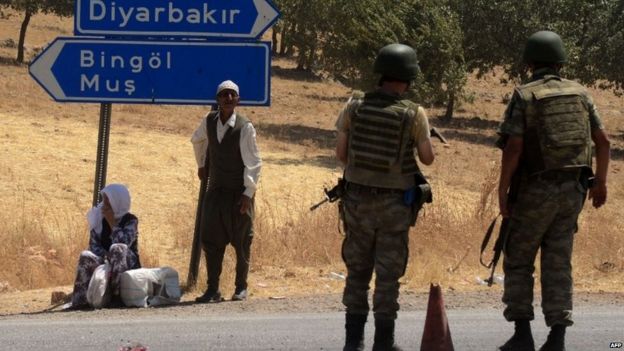 |
| Turkish soldiers patrolling Kurds dominated regions in Turkish, near Diyarbakir military base (Image: BBC) |
Turkey started
its fierce fight against the Kurdish fighters after the deadly terrorist attack
in the border city of Suruc that left at least 32 people dead. The attack was
blamed on ISIS and hit mostly Kurds, as this city is a Kurdish region. Kurds
accused Turkish government of ineffective fight against ISIS and even on
supporting the jihadists. Later that day two Turkish soldiers were killed in a
Kurdish attack on the Turkish border. A wave of violent protests followed by
the police raids and arrests of the suspected militants has shaken the country.
Ankara launched
its military operation against the Kurdish militants as well, carrying out
numerous aerial strikes and hitting military facilities of the PKK fighters,
their storage points and headquarters located in Northern Iraq. The operation
is ongoing for almost a week, with the fierce fight of the Kurdish militants in
retaliation of the Turkish strikes. Thus, at least five Turkish soldiers and
security personnel were killed on Thursday, 30 July, in a Kurdish border
attack.
Thus, after
initial attacks against ISIS, Turkish Armed Forces focused increasingly on the
PKK as Turkish air forces bomb dozens of targets of the group. Anew wave of
attacks against Turkish security forces came as a response, so the funerals of
the soldiers and policemen turned into a daily ritual during the latest week in
Turkey, as the conflict intensifies and deepens.
 |
| Turkish warplanes carrying out attacks against Kurds and ISIS as well in Iraq and Syria (Image: Times of Israel) |
The Hurriyet
Daily, Turkish official media source that at least 190 PKK fighters were killed
as a result of the ongoing aerial strikes of Turkey against the Kurds and nearly
300 fighters were wounded. The government has not yet confirmed this toll.
The strikes
targeted mostly military facilities and weapons storages of the group located
in the remote mountains in Northern Iraq, including the headquarters on Kandil Mountain.
Kurdish militates
in their turn accuse Ankara in collaborating with the ISIS fighters and assisting
the group. It’s worth mentioning that Kurdish troops made a significant impact
of the fights against ISIS in Iraq and near the borders with Turkey, and they
continue fighting the Islamist group since the beginning of the conflict in
2014.
The situation remains tense, as the long peace
process and negotiations between Turkish government and Kurds aiming to end the
30-year old Kurdish uprising and grant them official statues in under threat
now, as Turkish attacks against Kurds intensifies and Kurds strike in response.

No comments:
Post a Comment